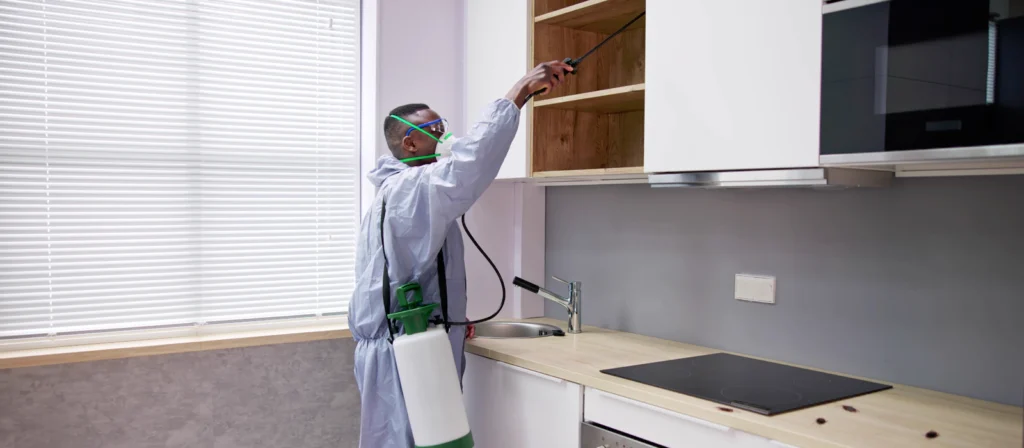


Here’s something most business owners don’t spend much time thinking about, until they absolutely have to. Pests.
Every year, businesses lose thousands of dollars dealing with issues that often start with something deceptively small: a few ants near a doorway, a mouse slipping unnoticed into a storeroom, or a cockroach finding its way into a commercial kitchen after hours.
At first glance, it doesn’t seem like much. Then reality kicks in and what looked like a minor nuisance has become everyone’s problem.
But the challenge is that every industry attracts different types of pests for different reasons. A restaurant’s vulnerabilities don’t look anything like those of a manufacturing facility.
Likewise, an office building faces a completely different set of risks compared to a healthcare centre.
That’s why smart businesses don’t rely on cookie-cutter pest control strategies. They adopt approaches that reflect the realities of their particular environment.
So, let’s unpack that a little.
Restaurants and Food Businesses: A Constant Balancing Act
If pests were choosing holiday destinations, commercial kitchens would probably sit near the top of the list. With food, moisture, warmth, and shelter, it’s basically a luxury resort from a pest’s perspective.
Restaurants, cafés, bakeries, catering operations, food courts, and takeaway outlets all face elevated pest pressure. It’s not necessarily because they’re unclean, quite the opposite, in fact. Even exceptionally well-maintained food businesses can encounter pest activity simply because of the nature of what they do.
- Crumbs happen.
- Deliveries arrive daily.
- Waste accumulates.
- Doors open and close constantly.
The usual suspects tend to be cockroaches, rodents, flies, ants, and stored-product insects. None of them are particularly welcome guests.
Maintaining rigorous cleaning schedules helps enormously, so does proper food storage.
Sealed containers, stock rotation, regular inspections, and sensible waste management practices can dramatically reduce opportunities for pests to gain a foothold.
Warehouses: Where Space Can Become the Enemy
Warehouses present an entirely different challenge. Unlike restaurants, they may not always contain large quantities of food. What they do offer, however, is something pests value nearly as much: Space and lots of it.- Rows upon rows of shelving.
- Pallets stacked high.
- Quiet corners that rarely see foot traffic.
- Loading docks opening throughout the day.
For rodents, birds, spiders, and various insect species, these environments can feel positively inviting.
One issue warehouse managers frequently encounter is visibility. Large facilities naturally create blind spots, so a pest issue can develop in one section of the building while remaining unnoticed elsewhere.
That’s why routine inspections are so important.
Pests occasionally arrive as stowaways hidden within pallets, packaging materials, or freight containers. Not common every day, perhaps, but common enough. Thus, incoming shipments deserve attention, too.
Offices Aren’t Off the Hook
People often assume pests prefer restaurants or industrial facilities. Unfortunately, pests aren’t nearly so selective.
Office buildings may seem less vulnerable on the surface, yet they provide plenty of resources. Staff kitchens, snack drawers, overflowing rubbish bins, and forgotten coffee cups often contribute to pest activity.
So, creating awareness among staff can be remarkably effective. Employees who know what warning signs to look for often become the first line of defence.
Healthcare Facilities: Precision Matters
Healthcare environments operate under a completely different set of expectations, and rightly so. Hospitals, clinics, aged care facilities, and specialist treatment centres are responsible for protecting vulnerable people. So, cleanliness isn’t merely desirable—it’s fundamental.
In these settings, pest management becomes far more than a maintenance issue. It becomes part of risk management.
Rodents, flies, ants, and cockroaches can introduce contamination concerns that healthcare providers simply cannot afford to ignore. Consequently, inspections tend to occur more frequently, documentation requirements become more rigorous, and prevention strategies are often more comprehensive.
It’s meticulous work.
Retail Businesses and Customer Perception
Retail is interesting because perception matters almost as much as reality.
A spotless showroom communicates professionalism. But a pest sighting? Well, that can undermine confidence almost instantly.
Retail businesses commonly encounter rodents, birds, ants, and various stored-product pests depending on the nature of their inventory. Stockrooms, delivery areas, and waste zones typically require the closest attention.
So, regular inspections are invaluable, but the goal isn’t merely eliminating pests after they appear. It’s preventing uncomfortable customer experiences before they occur.
There’s a subtle difference there, but it’s important.
Manufacturing Facilities: Complexity Creates Risk
What makes manufacturing particularly challenging is the sheer number of moving parts involved. Rodents may seek shelter near such equipment. Birds can create problems around loading areas. Flies and insects may be attracted by certain materials or production processes.
Managing these risks requires more than occasional inspections. The strongest pest management programs typically combine monitoring systems, facility maintenance, sanitation practices, staff training, and targeted treatments where necessary.
Think of it as layers of protection rather than a single solution because one weak link can sometimes create a surprisingly large headache.
A Smarter Way Forward
These days, many businesses are moving toward Integrated Pest Management, often shortened to IPM. The name sounds slightly technical, but the concept itself is refreshingly practical.
Instead of waiting for pests to appear and then reacting, IPM focuses on reducing the conditions that attract them in the first place. That may involve routine inspections, improved sanitation, structural repairs, monitoring systems, staff education, and moisture management.
It’s just sensible, preventative measures working together.
The Conclusion
Running a business can sometimes feel like spinning ten plates while answering emails and putting out small fires at the same time. There’s always something demanding your attention.
Pest control may not be the most exciting item on the agenda, but overlooking it can create consequences that ripple through your business. So, considering taking appropriate steps ahead of time is wise. If you need more insights on this, you can reach out to us at RF Pest Management.
A pest-free environment doesn’t just protect your assets. It protects your own peace of mind. And, that’s something every business could use a little more of.