

Finding a wasp nest around your Melbourne home can be unsettling. You may notice wasps flying around your garden, roof, shed or bins before you spot where they are coming from. It can be tempting to deal with the nest yourself, but disturbing an active colonycan quickly turn into a dangerous situation.
European wasps are a common concern in Victoria. They can sting repeatedly and may become aggressive when someone approaches or disturbs their nest. For this reason, the Victorian Department of Health recommends locating the nest and treating it with an insecticide registered for wasp control.
Here is what you should know before you approach a wasp nest.
Identify the Wasp Before Taking Action
Australia is home to many native species, which can differ from European wasps in their appearance, behaviour and nesting habits. Not every wasp you see around your Melbourne property needs the same type of treatment.
European wasps usually measure around 12mm to 16mm long. Queens can reach about 20mm. They have bright yellow bodies with black triangle-shaped markings, yellow legs and black antennae.Their nests often have a papery appearance because the wasps build them using chewed wood pulp and saliva. Around 80% of European wasp nests occur in the ground or close to ground level. The rest often appear inside buildings or in sheltered areas.
Paper wasps, however, can look similar, so avoid treating a nest simply because you see yellow and black insects nearby.
Do Not Disturb the Nest
The safest first step of dealing with a wasp colony is to keep your distance.
Do not poke the nest, throw objects at it, spray it with water or try to knock it down. Plus, avoid blocking its entrance. These actions can disturb the colony and cause the wasps to become aggressive and leave the nest.
European wasps can sting several times. They can also release a chemical signal that attracts other colony members when they feel threatened. So, disturbing a nest can quickly bring more wasps into the situation.
Keep children and pets away from the area until you arrange suitable treatment.
Find Where the Nest Is Located
You may notice several wasps around your garden without seeing the nest itself. It’s because the European wasps can travel up to half a kilometre from their nest while looking for food. Common nest locations include- Holes in the ground
- Around tree bases and hedges
- Retaining walls
- Rockeries
- Compost heaps
- Areas under old rubbish or furniture
- Roof spaces
- Wall cavities
- Sheltered areas around buildings
If you need to identify the general direction of the nest, observe wasps from a safe distance. Do not follow them closely or stand near the suspected entrance.
Keep Food Sources Away
Melbourne homes can attract European wasps when food and waste remain outdoors. These scavengers can feed on human food, fallen fruit, insects, garbage and other household waste.
You can reduce activity around your property by taking a few simple steps.
- Keep rubbish bins closed with tight fitting lids
- Remove fallen fruit from the garden
- Do not leave pet food or bones outside
- Keep compost covered
- Cover swimming pools when you do not use them
- Cover food during outdoor meals and barbecues
- Avoid drinking directly from cans or bottles outdoors
Avoid DIY Wasp Nest Removal
DIY wasp removal can create unnecessary risks, especially when the nest sits inside a wall, roof or underground cavity. You may not know how large the colony has become or how many wasps are inside.
Large colonies can become particularly difficult to manage. Agriculture Victoria notes that nests can grow significantly during summer and reach their peak around early autumn. Some nests can survive through winter in southern Australia and may contain tens of thousands of wasps.
Climbing onto a roof or reaching into a hidden cavity also creates additional risks. You could get stung while using a ladder or trying to reach a difficult area.
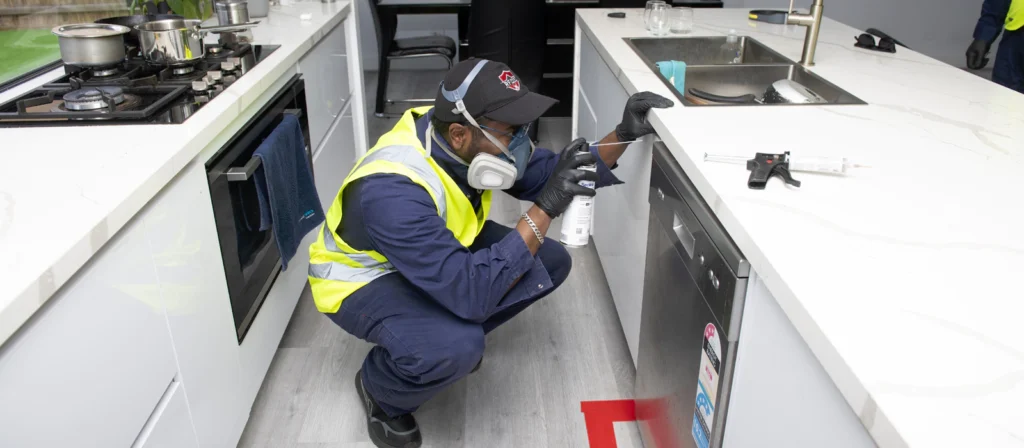
For an active nest near your home, it is safer to contact a licensed pest control professional.
Why Professional Treatment Makes Sense
A professional assesses the situation before choosing a treatment method. This matters because the nest location, wasp species and level of activity can all affect the safest approach.
Victorian health guidance recommends using an insecticide registered for the purpose when treating European wasp nests. It also recommends carrying out nest treatment early in the morning or at night when wasps are less active.
Professional pest controllers can also spot nests that you may not notice. Treating only the wasps flying around your garden may not solve the problem if an active colony remains nearby.
What to Do If You Get Stung
Most people experience pain, burning and a raised welt after a wasp sting. Swelling usually settles within a few hours.
Some people can develop a larger local reaction, with redness and swelling that can increase for one or two days. Watch for signs of a serious allergic reaction. If someone develops life threatening symptoms or anaphylactic shock after a wasp sting, call emergency services on 000 immediately.
If a pet gets stung and becomes distressed, contact a veterinarian for advice.
Take Action Before the Nest Grows
A small wasp problem can become much harder to manage as the colony grows. If you notice repeated wasp activity around one part of your Melbourne property, do not ignore it.
At RF Pest Management, we understand how stressful it can feel when you find a wasp nest around your home or business. We can inspect the area, identify the source of the problem and recommend a suitable treatment based on the nest location and level of activity. Our goal is to help you deal with wasps safely without putting yourself, your family or your pets at unnecessary risk.
If you notice an active wasp nest, keep your distance and avoid disturbing it. Contact RF Pest Management for professional wasp control in Melbourne, and let us help you take care of the problem safely and effectively.